
Make the Road Nevada: 2026 Latino Values Report
Make the Road Nevada • Data for Social Good • Sojourn Strategies • Democracy & Power Innovation Fund
Our Make the Road Nevada: 2026 Latino Values Press Release is now live. Read it here
Methodology
The Data for Social Good team conducted a statewide survey of registered Latino voters across Nevada, fielded in English and Spanish. Paired with an in-depth focus group of select survey respondents.
692
Registered Latino Voters Surveyed
±4.0%
Survey Margin of Error
EN/ES
Survey Offered in English and Spanish
Mar – Apr 2026
Survey Window
11
Focus Group Participants
4
Cluster Groups Identified
Key Findings
Seven Themes Shaping the Latino Vote
Cost of Living
60.8%
Name jobs/economy or housing as their top issue
Healthcare
57.8%
Find health insurance difficult to afford
Immigration & ICE
80.8%
Say ICE enforcement has gone too far
Latino Community
81.1%
Say mutual aid is what unifies the community
American Identity
83.7%
Say being American is important to their identity
American Dream
73.8%
Is the freedom to make life decisions
Vote Power
55.5%
Believe the community vote is powerful
Cost of Living — 60.8%
When asked to name their single most important issue, more than six in ten Nevada Latinos pointed to jobs and the economy (34.5%) or affordable housing (26.3%). Far ahead of healthcare, education, or the environment. The pressure is broadly felt: more respondents say their financial situation worsened over the past year (36.2%) than improved (25.2%), and gas, rent, and groceries top the list of expenses they struggle to cover.
Healthcare — 57.8%
A majority rated health insurance as difficult to afford (a 4 or 5 on a five-point scale), making it one of the hardest household costs alongside transportation and rent. Focus Group participants described premiums climbing after provider changes, specialists ordering duplicate tests that drive up bills, and some traveling to Mexico for more affordable care, even when they technically have coverage.
Immigration & ICE — 80.8%
Four in five respondents say ICE enforcement has gone too far over the past six months. That concern sits alongside a clear set of priorities: respondents overwhelmingly back a path to citizenship (83.2%) and addressing the application backlog, while mass deportation draws support from less than a quarter of respondents (23.1%). Roughly three in four respondents also agree that racial profiling is a real concern in Nevada.
Latino Community — 81.1%
The strongest source of unity is mutual aid: 81.1% say that helping other Latinos, even without personal benefit, is what holds the community together, ranking above speaking Spanish, shared media, or community events. Participants pointed to food and shared struggle as the connective tissue, while generational differences and “tribalism” by national origin or immigration status are what most often pull people apart.
American Identity — 83.7%
More than eight in ten respondents say being American is important to their identity, with 56.1% calling it “very important.” Yet that pride coexists with a sense of conditional belonging. Many describe feeling “ni de aquí, ni de allá,” not fully embraced in Nevada nor by relatives in their family’s country of origin, often citing how they’re treated because of their skin color or place of birth.
American Dream — 73.8%
For most, the American Dream is less about wealth than about autonomy: 73.8% define it as the freedom to make their own life decisions, such as where to live and what work to do, ahead of financial success or homeownership. At the same time, many feel that the dream is slipping out of reach, with rising down payments and mortgages pushing homeownership, in particular, beyond what hard work alone can secure.
Vote Power — 55.5%
Nevada Latinos believe far more in collective power than individual power: 55.5% feel the Latino community’s vote is powerful (a 4 or 5 on a five-point scale), compared with 46.2% who say the same of their own ballot. That gap, paired with high rates of talking politics with family (62.4%) and voting (53.3%), points to organizing and turnout, rather than persuasion, as the clearest path to translating numbers into influence.
Cluster Analysis
Four Ways Nevada Latinos Engage
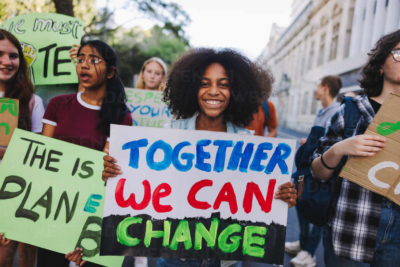


37.9%
Resistance Fighter
ORGANIZE
- Largest block; mostly Gen Z, lean Democrat
- Highest belief that profiling is an issue (87%)
- High individual & community vote power
30.8%
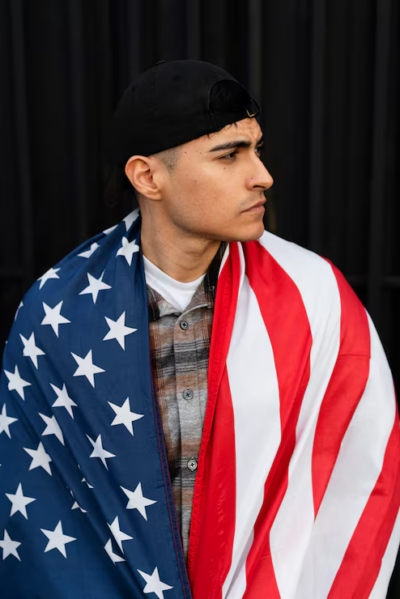
Faithless
RESTORE
- Low faith in political, economic & religious institutions
- Most likely to say the Dream doesn’t exist
- Largest share of moderates; strong NPP lean
17.6%
Empowered
TURNOUT
- Feel they belong; Community is powerful
- Highest importance on American Identity
- Largest share of first-generation Americans
13.7%
Economic Striver
RECONNECT
- Most educated; focused on jobs & economy
- Believe Latinos belong — not guests
- Largest share of conservatives: NPP & Rep
Resistance Fighter — 37.9%
The largest cluster and the most politically active. Composed mostly of Gen Z and Democratic voters, they have the strongest sense of voting power. Both individually and as part of the Latino community, they are the most likely of any group to say racial profiling is a serious issue (87.0%). But that energy is rooted in exclusion: they’re the least attached to their American identity (43.9% call it very important) and the most likely to feel Latinos are treated as guests in this country. As their name suggests, they are carving out space for themselves in a place where they don’t yet feel accepted, making them a natural base to organize.
Faithless — 30.8%
This group is defined by low trust across the board: political, economic, religious, and communal. They score highest in the belief that the traditional American Dream no longer exists, report the lowest levels of religious attendance, and are among the least likely to say that being American matters to them. Their sense of individual vote power is low, and their community vote power is only middling, reflecting a broader disengagement rather than opposition. Carrying the largest share of moderates and the strongest lean toward No Party Preference, they are less susceptible to political persuasion. The work here is to restore faith in the value of participation.
Empowered — 17.6%
The most optimistic and rooted cluster. They feel they belong in the U.S. and that the Latino community is genuinely powerful, giving them the highest sense of individual voting power of any group and a top-tier sense of collective power. They place the greatest importance on their American identity (81.1%), believe in the traditional American Dream, and hold the largest share of first-generation Americans. They’re also the most religious voters and rank only third in seeing racial profiling as an issue. They already believe in the system, so the priority is to turn their confidence into votes.
Economic Striver — 13.7%
The smallest but most upwardly focused cluster. They are the most educated group and the most concerned with jobs and the economy, framing financial success and hard work as the primary ways to honor their families. They firmly believe Latinos belong in the U.S., not as guests, and hold the second-highest attachment to American identity, while being the least likely to see racial profiling as a community issue. Their politics tilt conservative, with the largest share of Republican and No Party Preference voters, and their perceived vote power is the lowest of all. Individualistic by orientation with weak community ties, they need to be reconnected to a collective story that speaks to their ambitions.
Select Survey Questions